INITIAL FINDINGS INCORRECT. This lab report has changed as of Sep 29, 2018. Initial result from lab in June 2018 stated no 2C-B present. Lab retested and found 2C-B in a one-to-one ratio with AMB-FUBINACA.
We asked the lab to re-homogenize the powder and re-analyze it, and photograph the reagent results from the new test. Upon re-analysis in Sep 2018, the lab found that the sample did in fact contain 2-CB!
We believe that the contents of the capsule were not homogenized (mixed well) and so the tiny portion of powder from inside the capsule that the lab analyzed via GC/MS contained no 2C-B, but obviously the tiny portion of powder from the capsule that was tested with reagents and photographed did contain 2C-B. That would explain the difference in color changes between this sample and the previous AMB-FUBINACA-only sample (Sample #6237).
We're working with the lab to improve the testing procedures to minimize the issue of hotspots and coldspots within submitted capsules and powders.
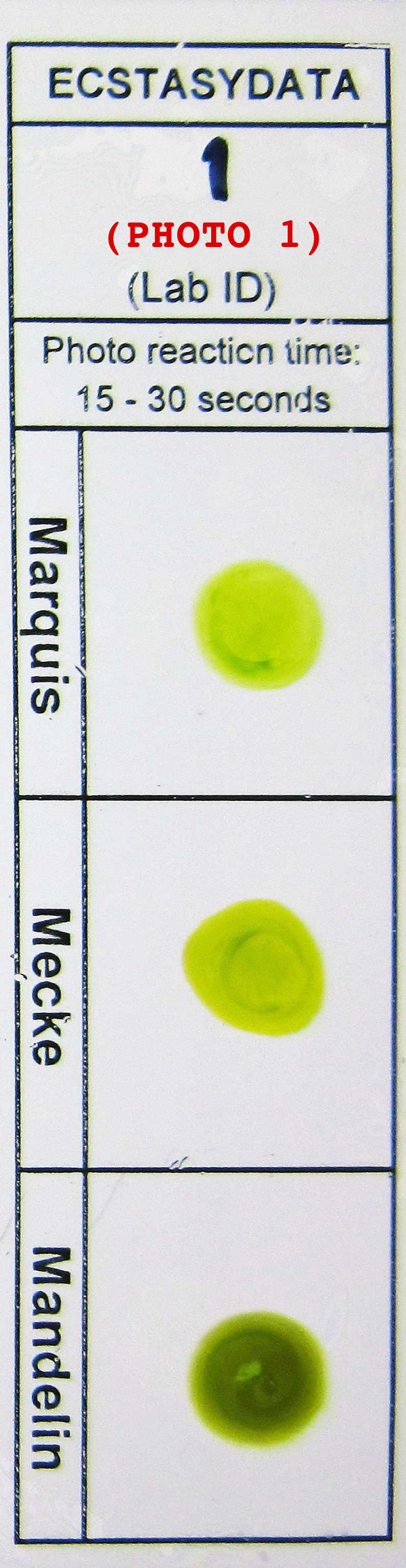
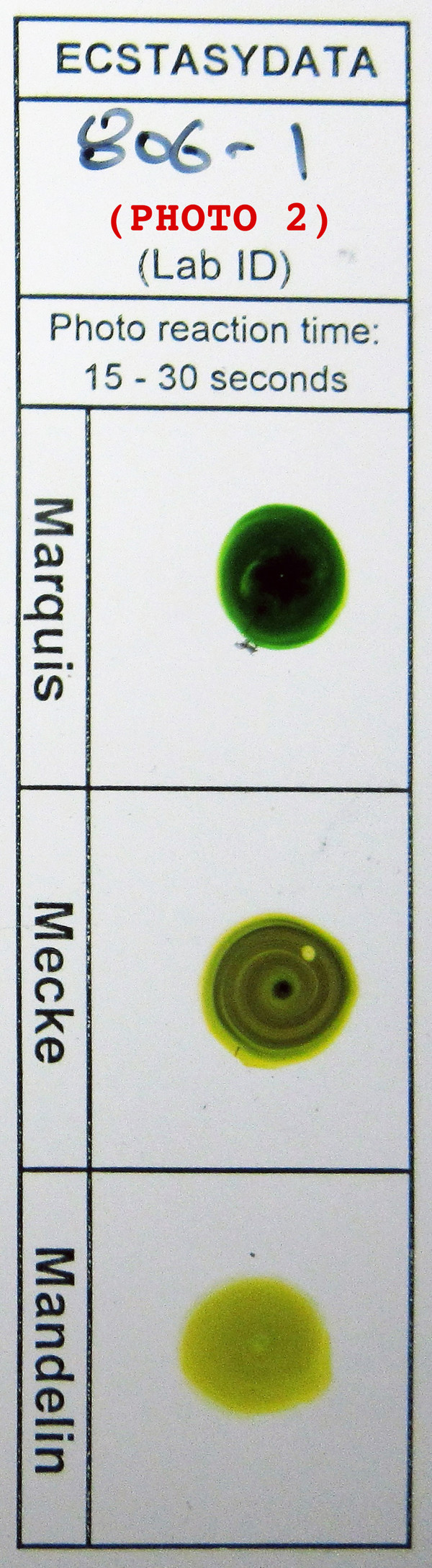
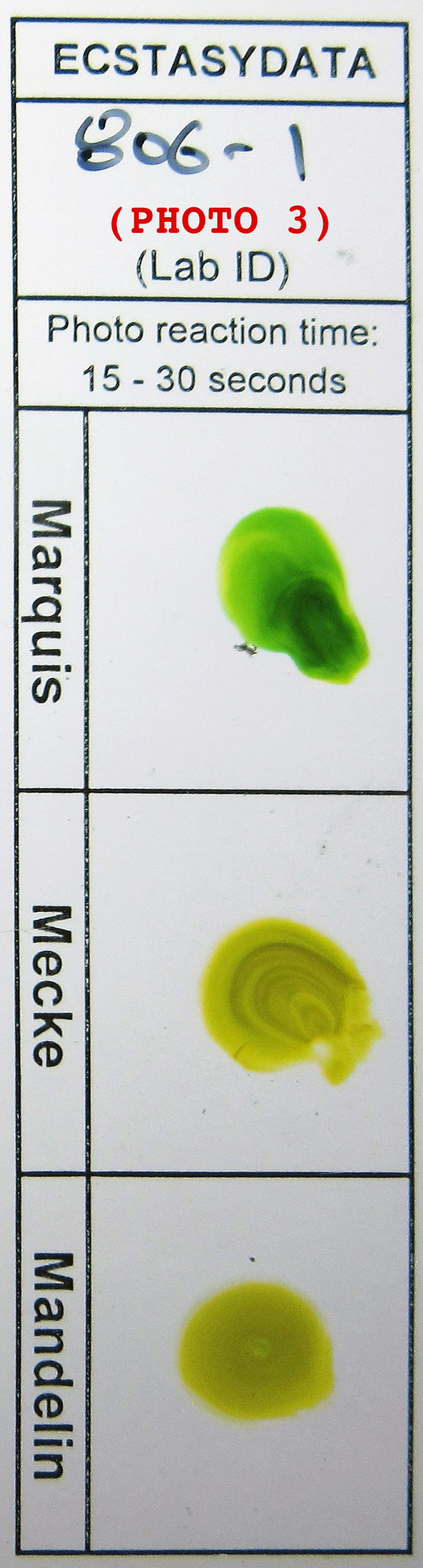
9/29/18: Regarding field test reaction photos: We're including the field test reaction photos from both the June and September 2018 analyses. There are obvious color differences in Marquis reactions between the different photos that include (top, Photo 1, June 2018) a light green with a spot of dark green, (middle, Photo 2, Sep 2018) a very dark green, and (bottom, Photo 3, Sep 2018) a medium dark green with very dark green.
The second and third photos are of the same re-test. Photo 3 was taken after what we call 'spreading' the reaction spots to make it easier to see the color. The only difference between photo 2 and photo 3 is that the lab technician used a non-reactive tool to swirl and spread the reaction spot. Photo 2 and Photo 3 were taken within a minute of each other.
Send in a sample for testing
DrugsData tests all psychoactive drugs including ecstasy tablets, powders, research chemicals, novel pschoactive substances, and other drugs through our licensed laboratory. Ecstasy/Molly tablets cost $100. Recreational drug powder/crystal/blotter costs $100. Pharmaceuticals, supplements and all others cost $150 per analysis.
Should the public have access to independent analysis of the products they consume?
The vast majority of analyses of over-the-counter, prescription, and recreational drugs are performed in secret with no independent oversite or review. No other historical record, free from politically-controlled agencies, is currently available in North America nor most other parts of the world.
DrugsData, a project of Erowid Center, needs the support of professionals, students, parents, individuals with means, and small foundations for a total yearly budget of around $120,000 USD. Erowid Center's general budget and the co-pays we require fund most of this cost.
In June, 2018, the lab analyzed this sample and reported only the presence of AMB-FUBINACA and 'no 2C-B detected'.
On September 23, 2018, imdeeami on Reddit pointed out that the field reagent color results were inconsistent between this sample and a previous sample containing only AMB-FUBINACA. See https://www.reddit.com/r/ReagentTesting/comments/9i8fgv/puzzling_reagent_tests_at_ecstasydata/.
We asked the lab to re-homogenize the powder and re-analyze it, and photograph the reagent results from the new test. Upon re-analysis in Sep 2018, the lab found that the sample did in fact contain 2-CB!
We believe that the contents of the capsule were not homogenized (mixed well) and so the tiny portion of powder from inside the capsule that the lab analyzed via GC/MS contained no 2C-B, but obviously the tiny portion of powder from the capsule that was tested with reagents and photographed did contain 2C-B. That would explain the difference in color changes between this sample and the previous AMB-FUBINACA-only sample (Sample #6237).
We're working with the lab to improve the testing procedures to minimize the issue of hotspots and coldspots within submitted capsules and powders.
The second and third photos are of the same re-test. Photo 3 was taken after what we call 'spreading' the reaction spots to make it easier to see the color. The only difference between photo 2 and photo 3 is that the lab technician used a non-reactive tool to swirl and spread the reaction spot. Photo 2 and Photo 3 were taken within a minute of each other.